



Introduction
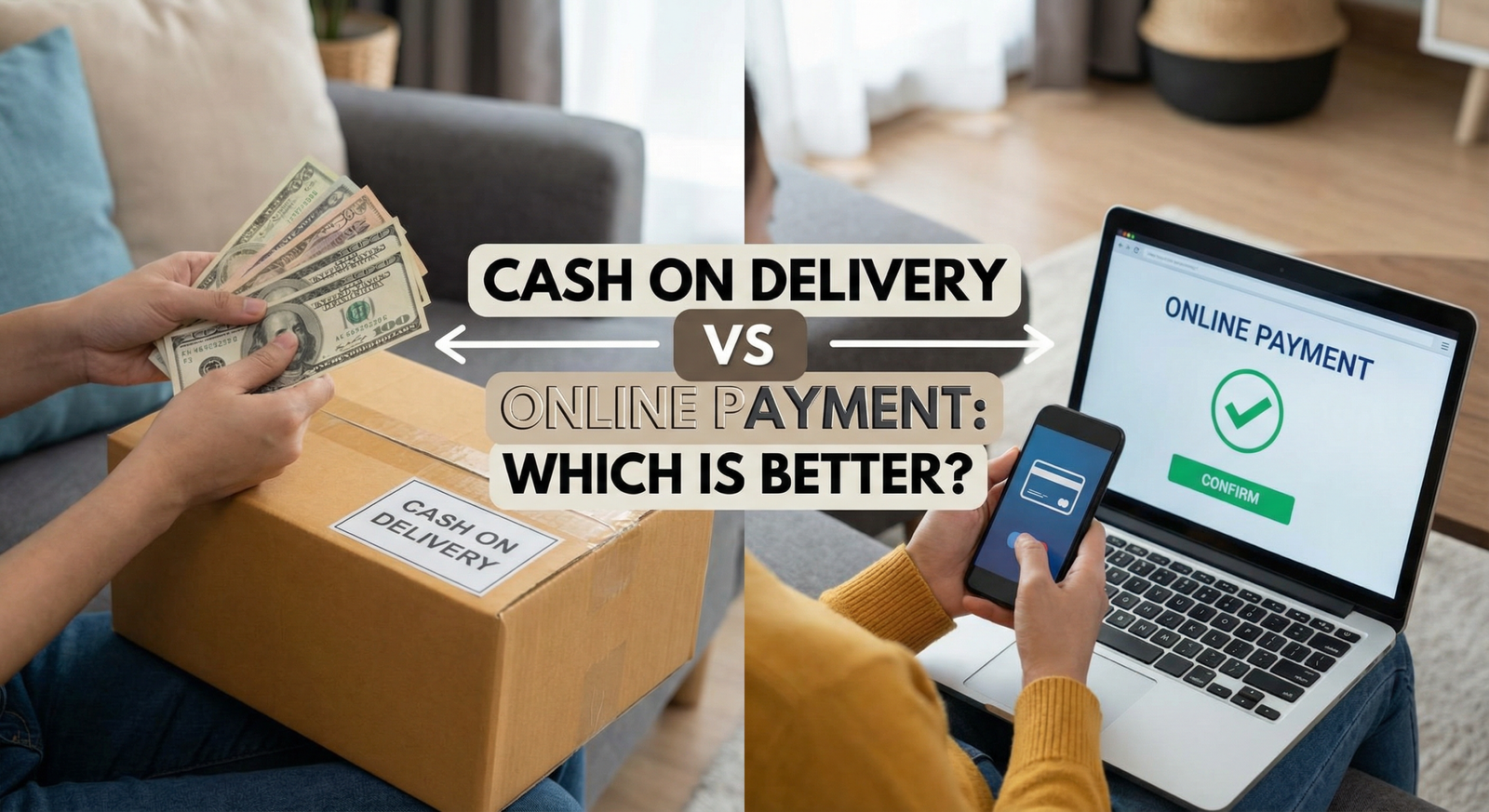
97.3% of US online orders use digital payment (Statista 2024). Yet cash on delivery (COD) is surging 34% in 2025 due to fraud concerns. This guide compares COD vs online payment for US consumers, including hidden costs and consumer protections.
1. Security: Fraud & Scam Comparison
Online Payment Fraud:
- 2024 losses: $10.2 billion (US)
- Credit cards: $0 liability (FCBA law)
- Debit cards: $50 max if reported in 2 days; unlimited after 60 days
COD Fraud:
- Fake delivery scams: Driver takes cash, leaves empty box
- Counterfeit products: Can’t inspect before paying
- No payment trail: Harder to dispute
Verdict: Online payment wins for US shoppers due to federal protections.
2. Consumer Protection Laws by Payment Type
Credit Cards (Best Protection):
- FCBA: $0 fraud liability
- Chargebacks: 60 days to dispute
- Section 75 (UK): Covers purchases £100-£30,000
PayPal/Venmo:
- Purchase Protection: Covers eligible items
- 180-day dispute window
- Fee: 2.9% + $0.30 (seller pays)
COD:
- No federal protection
- State laws vary: CA, NY have some COD protections
- Receipt is only proof
3. Hidden Costs: COD Fees & Processing
COD Surcharges:
- FedEx COD: $14.50 per package
- UPS COD: $14.50
- USPS: Not offered for domestic
Online Payment Fees:
- Usually $0 for buyer
- Sellers pay 2-4% processing
GEO Note: India: COD is free. Middle East: 5-10 AED fee. EU: No COD fees.
4. Convenience & Speed
Online Payment:
- Instant order processing
- 1-click checkout
- Recurring subscriptions easy
COD:
- Delivery delays: 2-3 days longer (payment collection)
- Must be home: Missed delivery = return to depot
- Exact change needed
5. When COD Makes Sense (US Specific)
Use COD When:
- Buying from unknown third-party sellers on Walmart.com or Amazon Marketplace
- High-value items ($500+) from new retailers
- Gift deliveries to avoid recipient handling payment
- Privacy concerns (no digital trail)
Avoid COD When:
- Amazon Prime (free shipping negates benefit)
- Subscriptions (impossible to manage)
- Low-value items (fees exceed item cost)
6. The “Partial COD” Strategy
Some US furniture retailers (Raymour & Flanigan, Ashley) offer 10% down, 90% COD. This balances risk: small deposit if fraud, full inspection before final payment.
7. Digital COD Alternatives (The Hybrid Model)
PayPal Pay in 4:
- Pay 25% upfront, rest over 6 weeks
- Full buyer protection
- No interest
Klarna/Afterpay:
- Similar model
- But: Limited dispute rights vs. PayPal
8. Geographic Payment Preferences
US: Credit cards dominate (73% of orders)
UK: Debit cards lead, strong Section 75
India: COD = 55% of e-commerce
Middle East: COD = 60-70%
Germany: Invoice payment (pay after delivery) = 30%
9. The “Payment Method Hacking” for Maximum Protection
Optimal Stack:
- Pay with credit card via PayPal
- Get FCBA + PayPal Protection
- Use virtual card numbers (Capital One Eno, Citi)
This gives you three layers of protection.
10. Return & Refund Speed
Online Payment:
- Refund to card: 3-5 business days
- PayPal: Instant to balance, 3-5 days to bank
COD:
- Check refund: 7-14 days by mail
- Cash refund: Only if returning in-store
FAQs
Q: Is COD safer than credit cards?
A: No. Credit cards offer $0 liability and chargebacks. COD offers no protection if product is defective.
Q: Why is COD rare in the US?
A: High fees ($14.50), fraud risk, and superior credit card protections make it obsolete for most purchases.
Q: Can I tip the delivery driver with COD?
A: Yes, but have exact cash. Most drivers carry no change.
Conclusion
For US shoppers, online payment with credit cards is superior 95% of the time. Use COD only for unknown sellers or high-risk purchases.
External Sources: FCBA, PayPal User Agreement, Statista Payment Data